If your audio interface shopping has progressed beyond “I need two combo jacks,” welcome to the big racks club.
Once you reach this level, choosing an audio interface becomes much more about the studio you are building around it.
How many physical analog inputs do you need? Are they microphone preamps or line inputs? Do you need MIDI? Will you expand through ADAT? Does the interface need to become the long-term centre of your studio?
This guide compares professional rackmount audio interfaces from RME, Universal Audio, Solid State Logic, Arturia and MOTU, with a focus on the details that actually change how the system works.
If terms like total I/O, ADAT, Word Clock or physical versus digital inputs are still confusing, start with our Audio Interface Buying Guide.
Every interface in this guide supports sample rates up to 192 kHz, so rather than repeating the same number in every row, we are using that space for physical I/O, MIDI, conversion and expansion.
Best Professional Rackmount Audio Interfaces in 2026
Prices below are in CAD and were checked in October 2026. Pricing and promotions can change.
ADAT counts refer to maximum channel counts at 44.1 or 48 kHz. Available ADAT channels decrease at higher sample rates.
| Interface | Total I/O | Analog I/O (Physical I/O) | Mic Pres | ADAT | MIDI I/O | Network / Large Format | Best For | Price |
|---|---|---|---|---|---|---|---|---|
| RME Fireface 802 FS | 30-in / 30-out | 12-in / 12-out incl. 2 stereo phones | 4 | 16-in / 16-out | 1 In / 1 Out, 5-pin DIN | AES, Word Clock | Professional all-round studio | $3,400 |
| RME Fireface UFX II | 30-in / 30-out | 12-in / 12-out incl. 2 stereo phones | 4 | 16-in / 16-out | 2 In / 2 Out, 5-pin DIN | AES, Word Clock, DURec | Recording and direct multitrack capture | $4,200 |
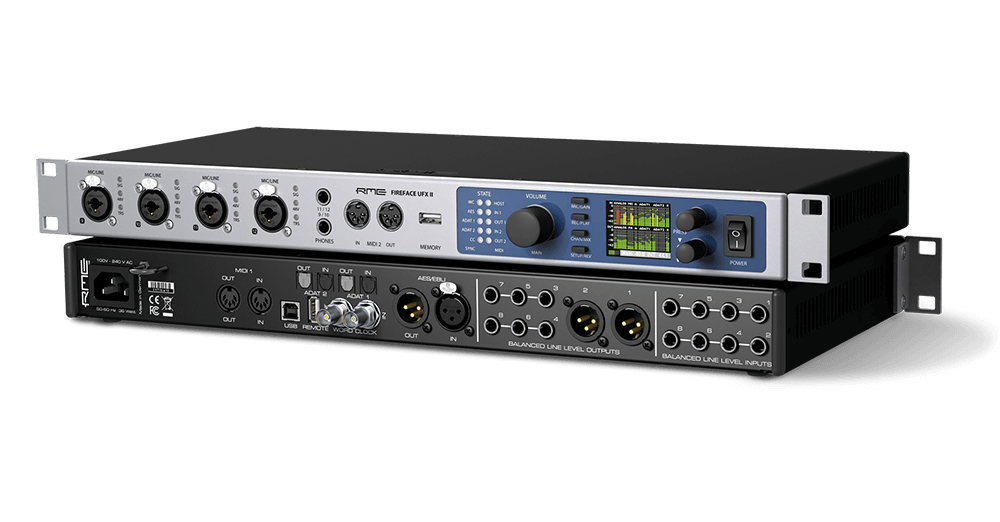
| RME Fireface UFX III | Up to 94-in / 94-out | 12-in / 12-out incl. 2 stereo phones | 4 | 16-in / 16-out | 2 In / 2 Out, 5-pin DIN + MIDI over MADI | 64-ch MADI, AES, Word Clock | Large multichannel and MADI systems | $4,525 |
| UA Apollo x6 Gen 2 | 16-in / 22-out | 6 analog inputs / 8 line + monitor outs + 2 stereo phones | 2 Unison | 8-in / 8-out | No physical MIDI I/O | S/PDIF, Word Clock, Thunderbolt | UAD project studios | $3,759 |
| UA Apollo x8 Gen 2 | 18-in / 24-out | 8 analog inputs / 10 line + monitor outs + 2 stereo phones | 4 Unison | 8-in / 8-out | No physical MIDI I/O | S/PDIF, Word Clock, Thunderbolt | Hybrid professional studios | $4,449 |
| UA Apollo x8p Gen 2 | 16-in / 22-out | 8 analog inputs / 10 line + monitor outs + 2 stereo phones | 8 Unison | 8-in / 8-out | No physical MIDI I/O | Word Clock, Thunderbolt | Bands, drums and multi-mic tracking | $5,139 |
| UA Apollo x16D | 18-in / 20-out | No analog inputs / 2 analog monitor outputs | 0 | No | No physical MIDI I/O | 16 x 16 Dante / AES67 | Networked professional systems | $4,159 |
| SSL 18 | 26-in / 28-out | 8 main inputs + talkback / 10 line outs + 2 stereo phones | 8 | 16-in / 16-out | 1 In / 1 Out, 3.5 mm TRS Type A | S/PDIF, Word Clock | Professional studio value and expansion | $1,419 sale |
| Arturia AudioFuse 16Rig | 32-in / 28-out at 48 kHz | 16-in / 12-out | 2 | 16-in / 16-out | 1 In / 2 Out-Thru, 5-pin DIN + USB MIDI host | Word Clock, USB MIDI host | Synths, DAWless rigs and hardware studios | $1,699.99 |
| Universal Audio Volt 876 | 24-in / 28-out | 8-in / 8-out + 2 stereo phones | 8 | 16-in / 16-out | 1 In / 1 Out, 5-pin DIN | S/PDIF via optical, Word Clock | Eight-preamp recording and ADAT expansion | $1,379 |
| MOTU 16A | 32-in / 34-out | 16-in / 16-out + stereo phones | 0 | 16-in / 16-out | No dedicated MIDI I/O | AVB, Word Clock | Large synth and line-level systems | $2,219.99 |
| MOTU 848 | 28-in / 32-out | 12-in / 12 line outs + 2 stereo phones | 4 | 16-in / 16-out | No dedicated MIDI I/O | AVB, Word Clock | Flexible hybrid studios | $2,219.99 |
Why Do Professional Rack Interfaces Cost So Much?
Once an interface climbs into four-figure territory, a lot of the cost lives in places that are not obvious from the front panel.
Converter performance matters. So do the analog input and output stages surrounding those converters. Clocking, low-latency drivers and the internal routing architecture become increasingly important once a system is handling dozens of channels.
Higher-end systems may also include onboard DSP, recallable preamps, standalone operation, direct recording or professional digital formats such as MADI.
Reliable software support over many years is another major part of the value, especially in a studio that depends on the interface every day.
This is also why a 32-bit interface is not automatically superior to a 24-bit interface. Converter implementation, dynamic range and the complete analog design matter more than one number on the specification sheet.
1. RME Fireface Family
Personal disclosure: I love RME.
RME's appeal goes deeper than raw channel count. TotalMix FX gives you an extremely flexible internal routing environment, RME develops its own interface core and drivers, and the Fireface range is built to remain useful as the studio around it becomes more complex.
The three models below share a similar physical analog layout. The biggest jump comes when the UFX family adds direct USB recording, and then the UFX III opens the door to MADI.
| Model | Total I/O | Analog I/O (Physical I/O) | Mic Pres | ADAT | MIDI I/O | Conversion / Clocking | Standout Feature |
|---|---|---|---|---|---|---|---|
| Fireface 802 FS | 30 x 30 | 12-in / 12-out incl. phones | 4 | 16-in / 16-out | 1 In / 1 Out | RME AD/DA + SteadyClock FS | Professional RME routing at the lowest price of the three |
| Fireface UFX II | 30 x 30 | 12-in / 12-out incl. phones | 4 | 16-in / 16-out | 2 In / 2 Out | RME reference-class AD/DA + SteadyClock | DURec direct USB recording |
| Fireface UFX III | Up to 94 x 94 | 12-in / 12-out incl. phones | 4 | 16-in / 16-out | 2 In / 2 Out + MIDI over MADI | Updated RME AD/DA design + SteadyClock FS | 64-channel MADI + DURec |
RME Fireface 802 FS


RME Fireface UFX II

RME Fireface UFX III
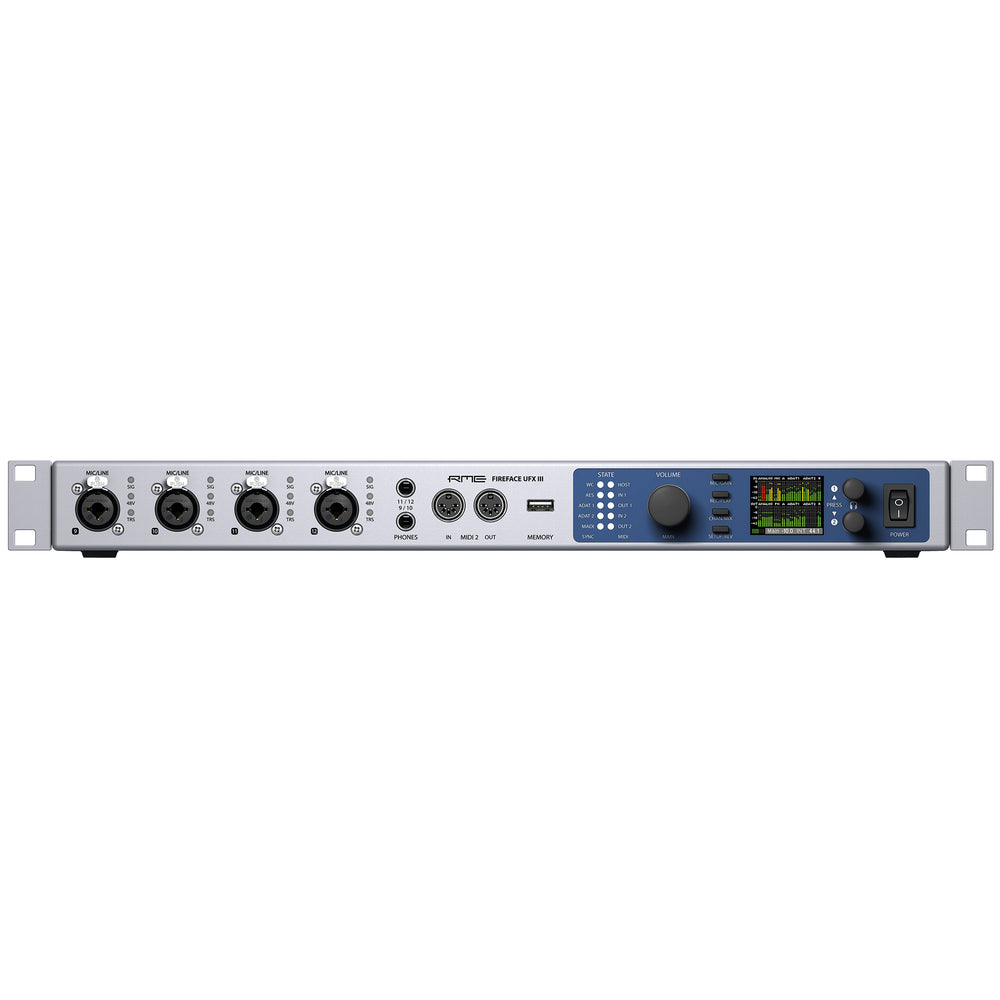
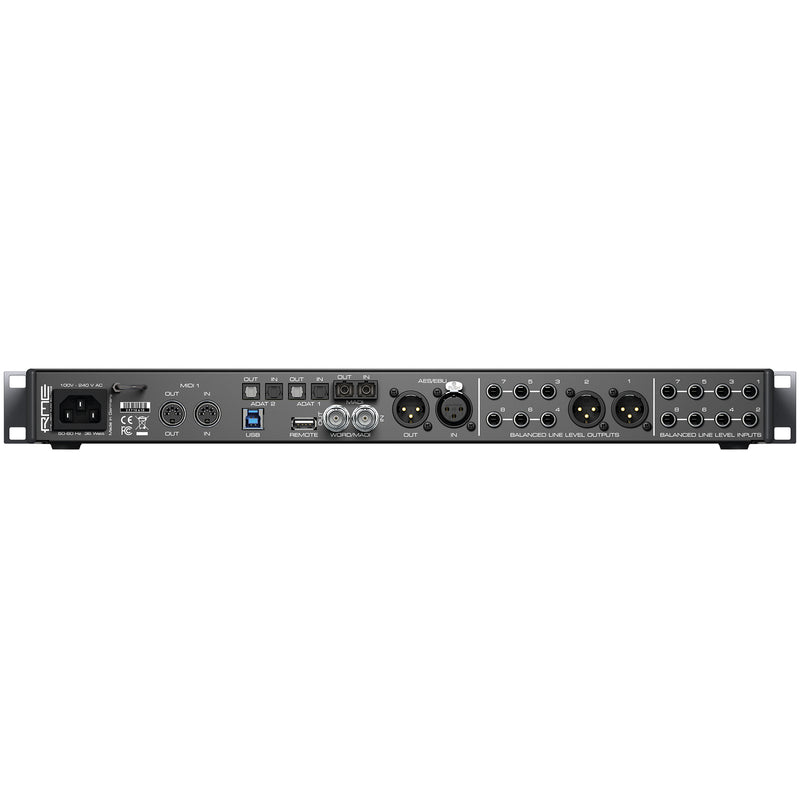
The UFX III uses an updated analog and digital design with new AD and DA conversion compared with earlier UFX generations. Its analog outputs are DC-coupled, while MADI can carry up to 64 channels at standard sample rates.
Best for: studios that need deep routing, strong driver support and a system that can keep expanding for years.
Explore the RME Fireface UFX III at Moog Audio →
2. Universal Audio Apollo X Family
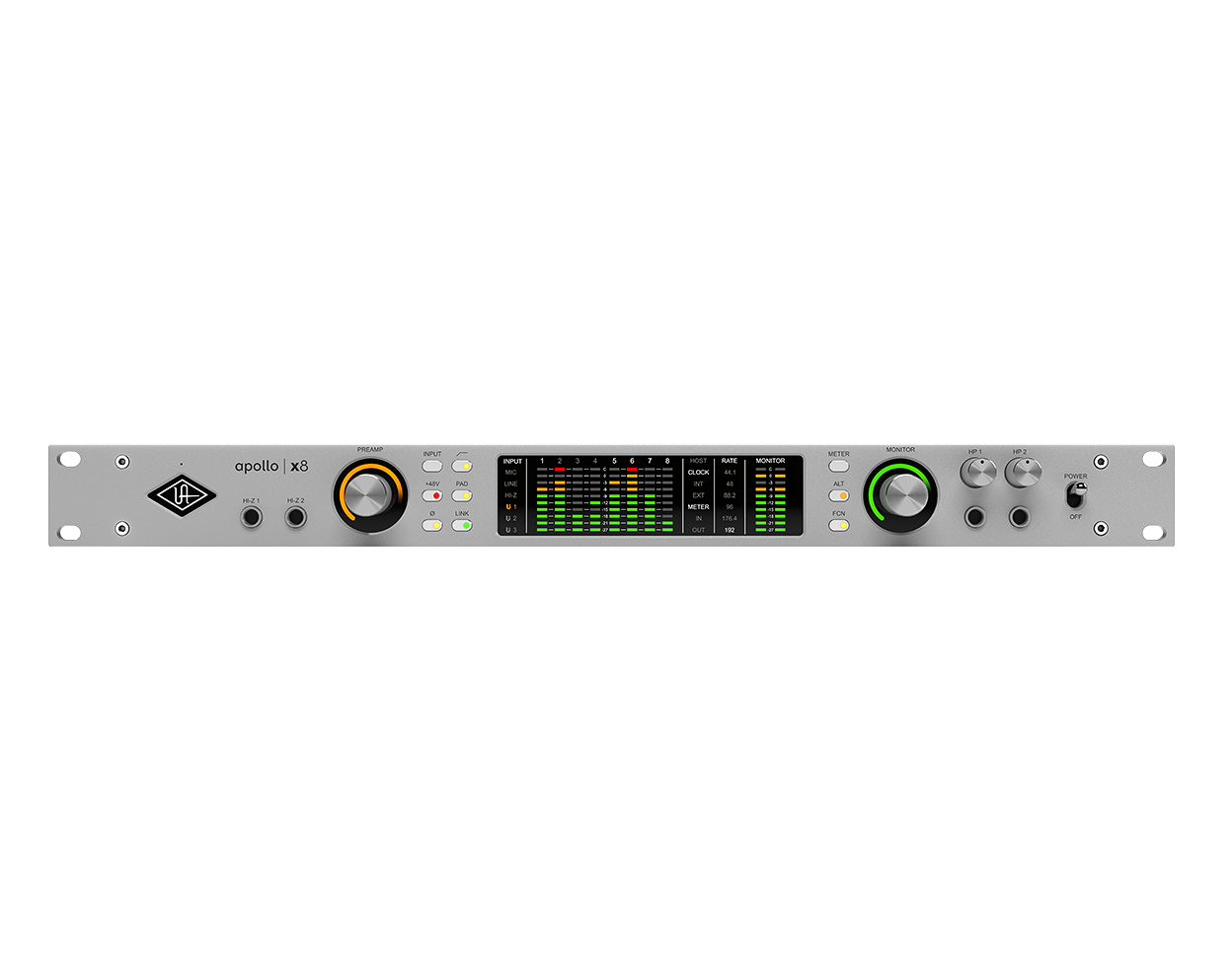
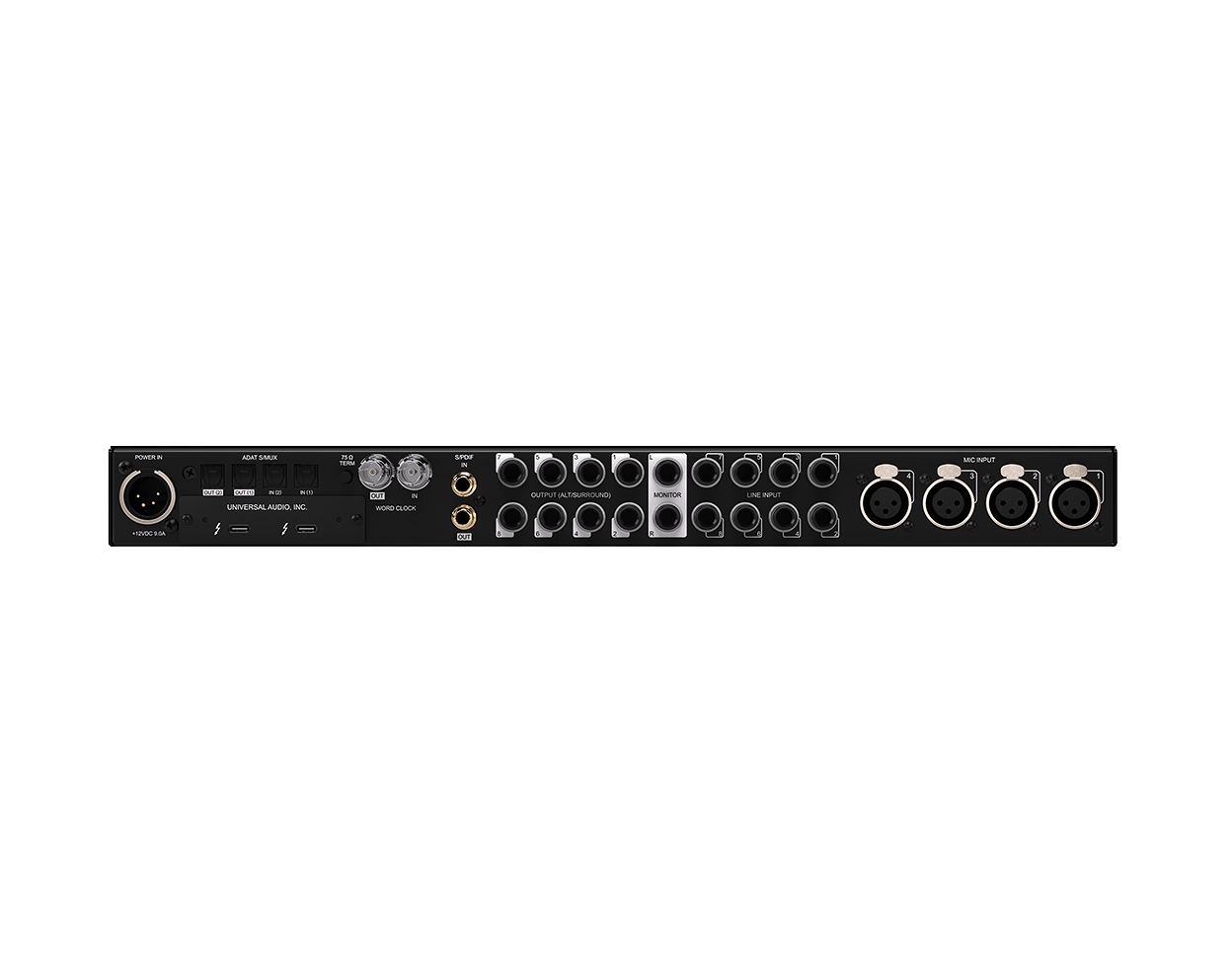
Apollo takes a different approach to the high-end interface. The hardware, UAD Console software and onboard HEXA Core DSP are designed as one recording environment.
What is a Unison preamp?
Unison is Universal Audio's system for making an Apollo input stage respond more like the analog preamp or channel strip being modelled.
When you load a compatible Unison plug-in, the Apollo can change parameters such as input impedance, gain staging and the behaviour of the physical preamp circuit.
This is a major part of the Apollo workflow if you like recording through models of classic preamps and channel strips rather than adding those sounds only after recording.
| Model | Total I/O | Analog I/O (Physical I/O) | Mic Pres | ADAT | MIDI I/O | Conversion / Clocking | Standout Feature |
|---|---|---|---|---|---|---|---|
| Apollo x6 Gen 2 | 16 x 22 | 6 analog inputs / 8 line + monitor outs + 2 stereo phones | 2 Unison | 8-in / 8-out | No physical MIDI | Apollo X Gen 2 24-bit conversion + Dual-Crystal Clocking | HEXA Core DSP with 2 Unison pres |
| Apollo x8 Gen 2 | 18 x 24 | 8 analog inputs / 10 line + monitor outs + 2 stereo phones | 4 Unison | 8-in / 8-out | No physical MIDI | Apollo X Gen 2 24-bit conversion + Dual-Crystal Clocking | Balanced mix of preamps and line I/O |
| Apollo x8p Gen 2 | 16 x 22 | 8 analog inputs / 10 line + monitor outs + 2 stereo phones | 8 Unison | 8-in / 8-out | No physical MIDI | Apollo X Gen 2 24-bit conversion + Dual-Crystal Clocking | Eight Unison preamps for larger tracking sessions |
| Apollo x16D | 18 x 20 | No analog inputs / 2 monitor outputs | 0 | No | No physical MIDI | Apollo X conversion + professional clocking | 16 x 16 Dante + realtime UAD DSP |
Universal Audio Apollo x6 Gen 2


Universal Audio Apollo x8 Gen 2
Universal Audio Apollo x8p Gen 2


Universal Audio Apollo x16D


Best for: producers who specifically want the Apollo recording workflow, realtime UAD DSP and Unison preamps. The x16D is the specialist option when Dante is part of the system.
3. SSL 18: A Lot of Studio for the Money


The SSL 18 gives you eight SSL-designed mic and line preamps, ten balanced line outputs, two independent headphone outputs and up to 16 channels of ADAT I/O at standard sample rates.
You also get S/PDIF, MIDI, talkback and DC-coupled outputs. SSL 360 provides the low-latency mixer and flexible monitor routing.
The converters run at 32-bit / 192 kHz, with 120 dB dynamic range across the main input paths and up to 125 dB on the line and monitor outputs.
And then there is the current price.
$1,419 CAD on sale, current as of October 2026, compared with its regular price of $1,749 CAD.
MIDI I/O: One MIDI input and one MIDI output using 3.5 mm TRS Type A connections.
Best for: recording studios that want eight preamps, lots of outputs and room to expand without immediately entering flagship-interface pricing.
Explore the SSL 18 at Moog Audio →
4. Arturia AudioFuse 16Rig: Built for Hardware
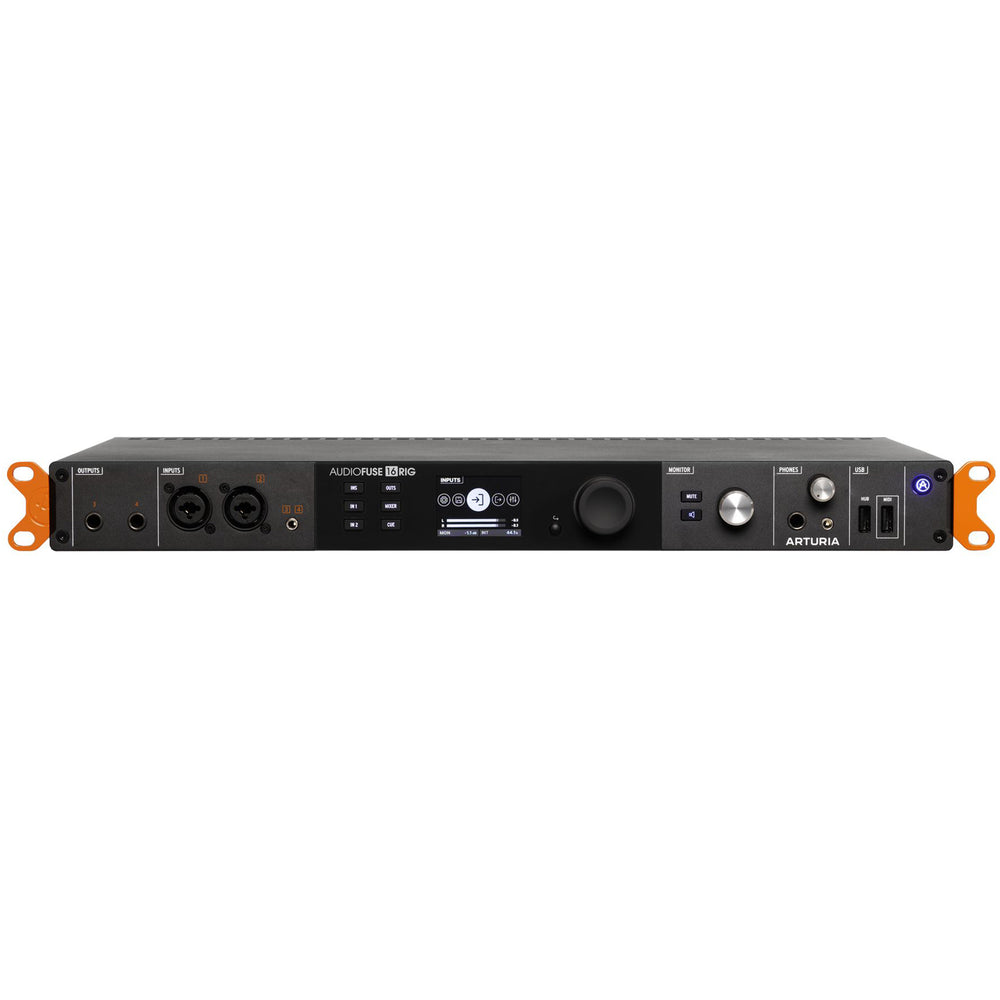
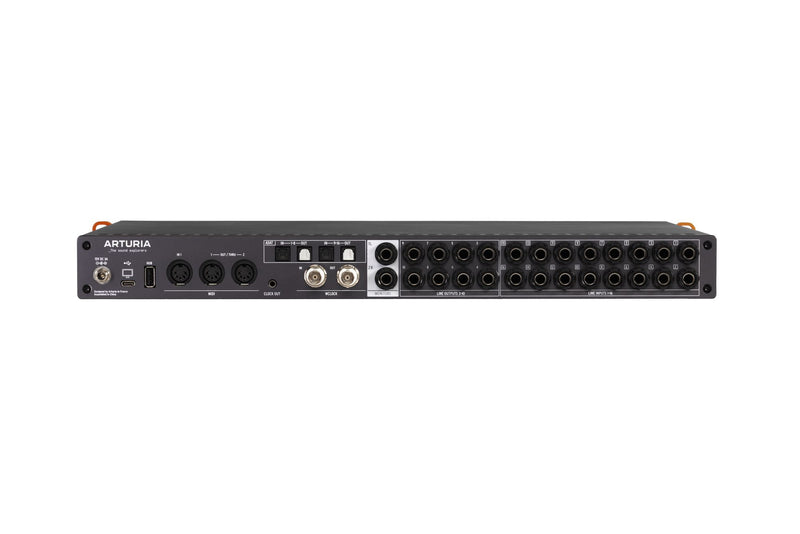
The AudioFuse 16Rig is one of the most interesting interfaces here for electronic musicians because so much of the chassis is dedicated to line-level hardware.
There are 16 analog inputs and 12 analog outputs, with two digitally controlled microphone preamps. Eight line outputs are DC-coupled.
Arturia uses ESS and Cirrus Logic converter technology in the 16Rig. It also includes internal standalone mixing, allowing the interface to route audio and MIDI without a computer.
MIDI I/O: One 5-pin DIN MIDI input, two MIDI outputs/thru, plus a USB MIDI host for class-compliant controllers and instruments.
Best for: large synth collections, drum machines, modular systems and DAWless studios where keeping hardware permanently connected matters more than having eight mic preamps.
Explore the Arturia AudioFuse 16Rig at Moog Audio →
5. Universal Audio Volt 876: Eight Preamps Without Apollo Pricing


The Volt 876 gives you eight digitally controlled microphone preamps with Assistive Auto-Gain, Vintage mode inspired by UA's 610 console and analog 76 compressor circuits on every input.
Its 32-bit / 192 kHz converter design was developed specifically for the 876. The complete converter and analog implementation matters more than comparing bit-depth numbers in isolation.
Volt 876 can also operate as an ADAT expander. If you eventually change your main interface, the 876 can continue working as an eight-channel preamp and converter instead of becoming an expensive rack ornament.
MIDI I/O: One MIDI input and one MIDI output using traditional 5-pin DIN connectors.
Best for: drums, bands and sessions that need eight preamps with hands-on analog colour and plenty of digital expansion.
Explore the Universal Audio Volt 876 at Moog Audio →
6. MOTU 16A and 848
MOTU's rack interfaces make particular sense when line-level I/O and flexible internal routing are high priorities.
| Model | Total I/O | Analog I/O (Physical I/O) | Mic Pres | ADAT | MIDI I/O | Conversion / Clocking | Standout Feature |
|---|---|---|---|---|---|---|---|
| MOTU 16A | 32 x 34 | 16-in / 16-out + stereo phones | 0 | 16-in / 16-out | No dedicated MIDI I/O | 32-bit ADC / DAC architecture | 16 analog line inputs + 16 line outputs |
| MOTU 848 | 28 x 32 | 12-in / 12 line outs + 2 stereo phones | 4 | 16-in / 16-out | No dedicated MIDI I/O | ESS Sabre32 Ultra DAC technology | More traditional hybrid studio layout |
MOTU 16A


MOTU 848

The 16A is particularly well suited to a hardware studio because the physical I/O is almost entirely line-level. Sixteen synthesizer or outboard connections can stay patched without using rack space on mic preamps you do not need.
The 848 adds four microphone preamps and a more traditional studio layout. Its ESS Sabre32 Ultra DAC section and internal 64-channel mixer make it the more general-purpose option of the two.
Best for: studios that need high line-I/O counts and flexible routing.
What If the Audio Interface Has No MIDI Ports?
That is completely fine.
Your audio interface does not have to be your MIDI interface.
A dedicated MIDI interface connects to the computer separately and can provide far more hardware MIDI connectivity than most audio interfaces ever could.
For example, the iConnectivity mioXL can handle DIN MIDI, USB MIDI and RTP Network MIDI as a dedicated MIDI hub.
Which Rackmount Audio Interface Should You Choose?
RME Fireface: excellent for deep routing, professional reliability, strong driver support and studios that want one central interface to grow around.
Universal Audio Apollo X: particularly strong if you want realtime UAD processing, Unison preamps and the Apollo recording workflow.
SSL 18: the value proposition is extremely strong if you need eight preamps, lots of outputs, flexible routing and ADAT expansion.
Arturia AudioFuse 16Rig: especially interesting for electronic musicians who want extensive line I/O, MIDI connectivity and standalone hardware routing.
Universal Audio Volt 876: a compelling eight-preamp option with analog colour, MIDI and useful ADAT expansion possibilities.
MOTU 16A / 848: worth considering when large line-level I/O and flexible internal routing are central to the studio.
Build Around the Studio You Actually Want
At this level, the smartest purchase comes from thinking about the whole system rather than chasing one specification.
Count your physical analog inputs first. Decide how many of those need microphone preamps. Look at the number of real analog outputs if external processing, multiple monitor pairs or hardware routing is part of your plan.
Then think about MIDI, digital expansion and whether you want the interface to keep serving you as the studio becomes larger.
If you need help decoding the specifications themselves, read our Audio Interface Buying Guide.
For smaller systems, see our 10 Best 2-Channel Audio Interfaces for Music Production in 2026.
For a broader range of recommendations, see our Best Audio Interfaces for Music Production in 2026.
You can browse the complete audio interface collection at Moog Audio →
Building a larger studio in Montreal?
If you want help working out how many physical inputs, microphone preamps, outputs, MIDI connections or digital expansion channels your setup needs, visit Moog Audio on Saint-Laurent with a list of the equipment you want connected. You can also call (514) 284-7434 to check current availability before visiting.