Buying your first synthesizer can feel overwhelming. There are analog synthesizers, digital synthesizers, hybrid synths, semi-modular instruments, desktop synths, keyboard synthesizers, grooveboxes, and a small galaxy of other ways to make electronic sound.
The good news is that you do not need to understand synthesis before buying your first synthesizer. A good beginner synth should make you want to sit down, turn a few knobs, change a sound, and immediately hear what happened.
At Moog Audio, we carry synthesizers for beginners, producers, performers and sound designers. This guide focuses specifically on instruments that make it easier to learn, experiment and grow without becoming obsolete as your skills develop.
Looking for a deal? Browse synthesizers currently on sale at Moog Audio.
What Makes a Good Beginner Synthesizer?
Before choosing your first synthesizer, think about how you naturally want to make music.
Do you want to learn traditional subtractive synthesis? Play chords and pads? Build basslines? Experiment with strange digital sounds? Make sequences without a computer? Sample sounds from the world around you?
There is no single correct entry point.
A beginner-friendly synthesizer usually gives you several of the following:
- Hands-on controls for oscillators, filters, envelopes and modulation
- A signal flow that is easy to understand
- Presets you can explore and modify
- A built-in sequencer or arpeggiator
- Polyphony if you want to play chords
- MIDI or USB connectivity
- Enough depth to remain useful after the beginner stage
The most important feature is simpler: you should want to play it.
1. Korg Minilogue: Best First Analog Synth for Learning the Fundamentals
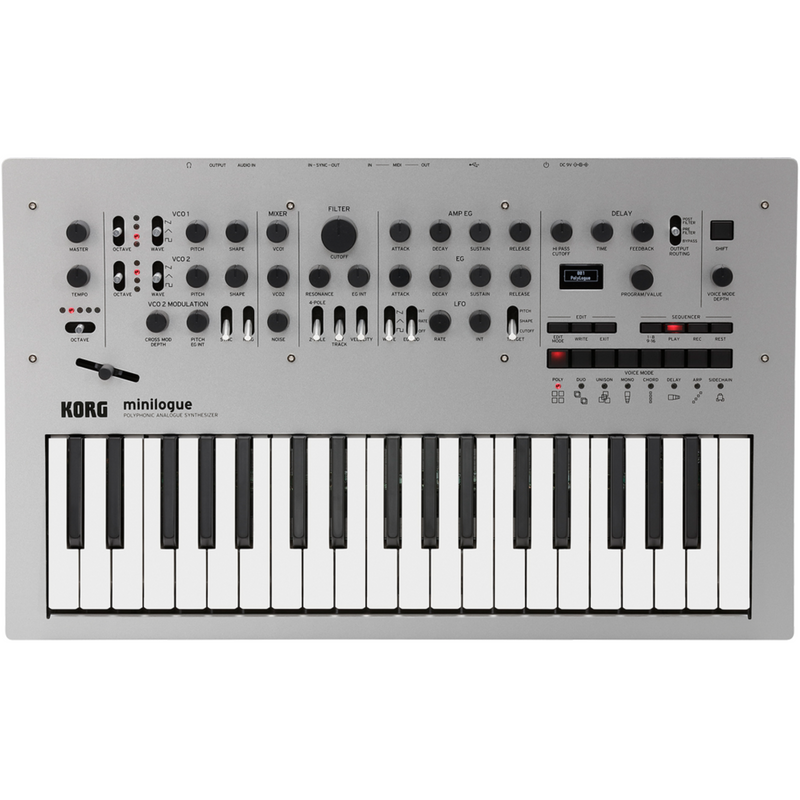
If you want a first synthesizer that actually teaches you how synthesis works, the Korg Minilogue remains one of the strongest starting points.
The Korg Minilogue is a 37-key programmable analog polyphonic synthesizer whose layout puts the essential parts of subtractive synthesis directly in front of you. Oscillators generate the raw sound, the filter shapes its frequency content, envelopes create movement over time, and modulation brings the patch to life.
Because those relationships are visible on the front panel, the instrument encourages learning by doing. Load a preset, change the oscillator shape, close the filter, shorten an envelope and listen to what changes.
It also includes a polyphonic step sequencer, motion sequencing, onboard delay and an oscilloscope display that lets you literally see the waveform changing.
Best for: beginners who want to understand analog and subtractive synthesis rather than only browse presets.
Explore the Korg Minilogue at Moog Audio →
2. Korg Minilogue XD: Best Beginner Hybrid Synth
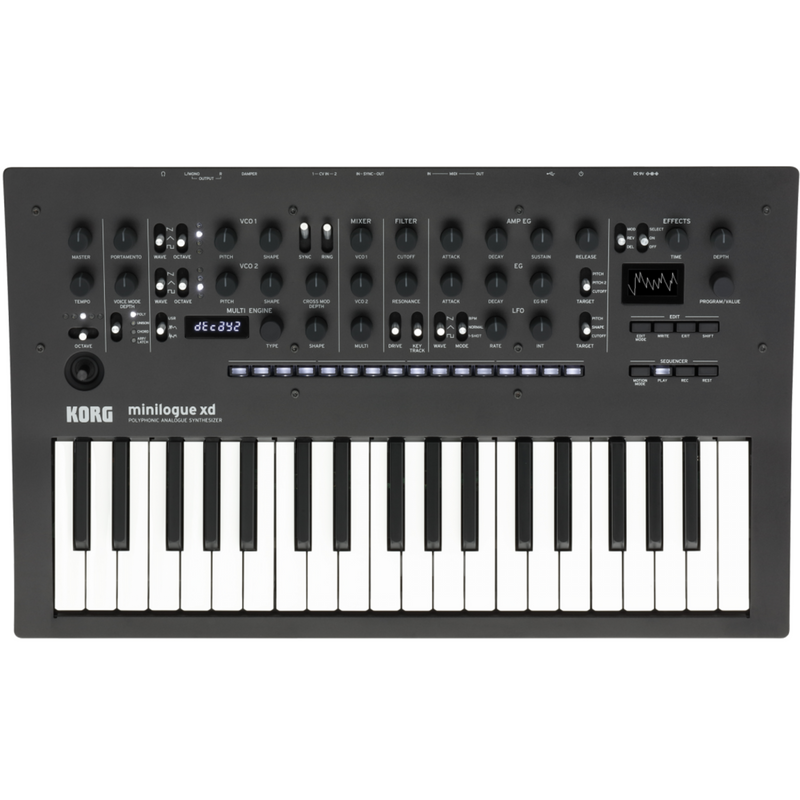
The Korg Minilogue XD takes the accessible structure of the original Minilogue and opens another door into digital sound design.
It combines analog oscillators and filters with a digital Multi Engine, onboard effects, sequencing and microtuning. That means a beginner can first learn the familiar oscillator → filter → envelope relationship and then gradually move into digital synthesis and more unusual textures.
The result is an instrument capable of chords, basses, leads, sequences, pads and experimental sounds without asking you to master everything at once.
Best for: beginners who want a traditional learning path but expect to explore deeper sound design later.
Explore the Korg Minilogue XD at Moog Audio →
3. Arturia MicroFreak: Best Beginner Synth for Experimental Sound Design
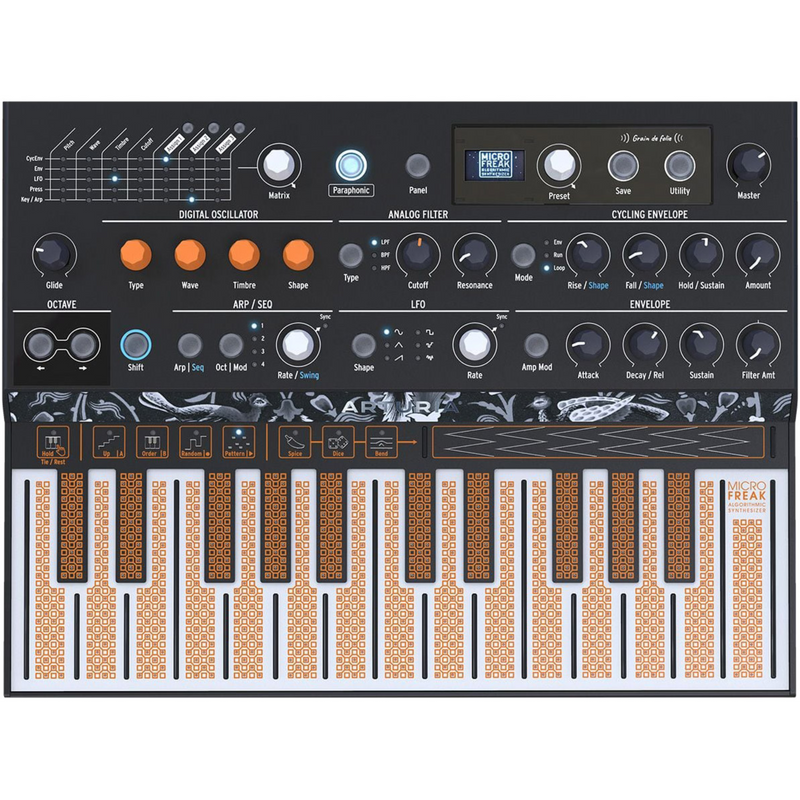
Not every beginner wants to start with a conventional analog synthesizer. The Arturia MicroFreak is for the person who learns by discovering strange sounds and asking, “What happens if I do this?”
The Arturia MicroFreak combines a versatile digital oscillator section with an analog filter, modulation matrix, sequencer, arpeggiator and pressure-sensitive capacitive keyboard. Its sound engine explores approaches including wavetable, physical modelling and virtual analog synthesis.
Its modulation matrix is also a useful introduction to modulation because you can clearly see a source controlling a destination. That principle carries over into much more advanced synthesizers and modular systems later.
Best for: experimental producers, curious sound designers and beginners who prefer exploration over a strictly traditional learning path.
Explore the Arturia MicroFreak at Moog Audio →
4. Arturia MiniFreak: Best Polyphonic Synth for Experimental Beginners
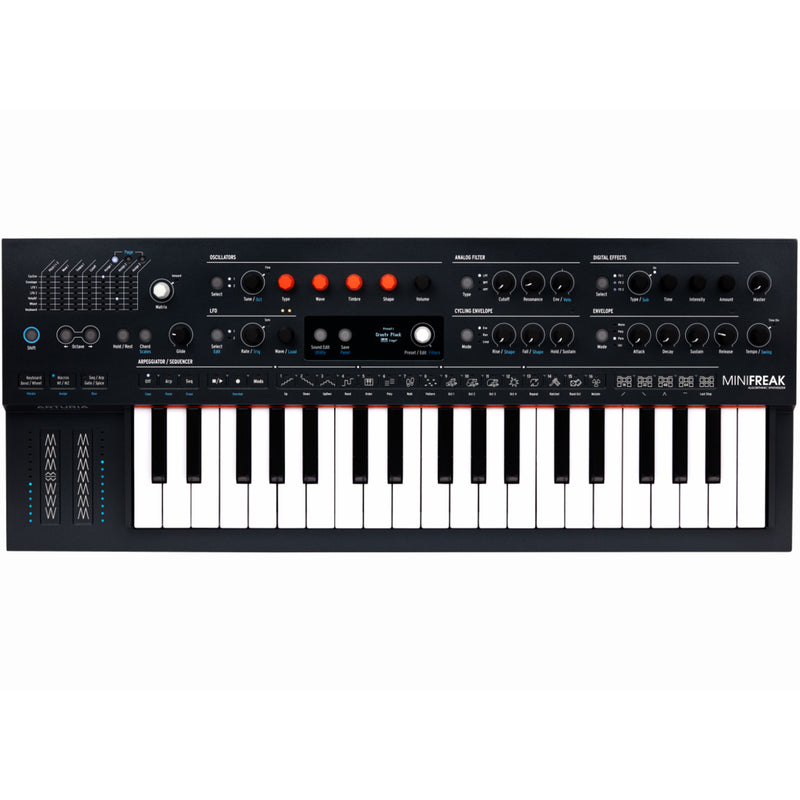
If the MicroFreak appeals to you but you want a more complete keyboard instrument, the Arturia MiniFreak expands the concept into a six-voice polyphonic hybrid synthesizer.
It combines two digital sound engines with analog filters, modulation, sequencing, effects and a 37-note keyboard. You can start with presets and straightforward oscillator and filter changes, then progressively explore routing, modulation and sequencing.
Because it covers classic synth sounds as well as stranger digital territory, the MiniFreak can serve as a first synth without feeling like one you will immediately outgrow.
Best for: musicians who want one polyphonic keyboard capable of both traditional and experimental synthesis.
Explore the Arturia MiniFreak at Moog Audio →
5. Novation Bass Station II: Best Beginner Synth for Bass and Leads
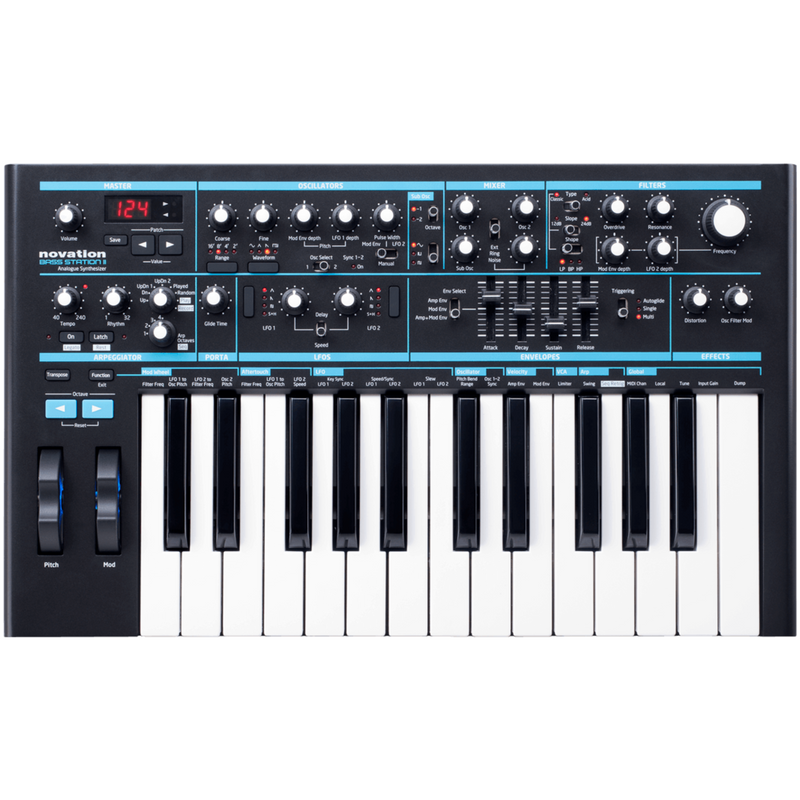
If basslines, leads and sequences are your priority, a monophonic synth can actually make learning easier.
The Novation Bass Station II gives you two oscillators, filters, envelopes, modulation, an arpeggiator and step sequencing in a focused analog instrument.
The straightforward panel makes the relationships between oscillator, filter, envelope and modulation easy to hear. There are fewer voices to manage, so you can concentrate on the behaviour of a single sound.
Despite its name, the Bass Station II isn't limited to bass. It is equally capable of leads, effects, acid-style sequences and more aggressive electronic timbres.
Best for: techno, house, electro and electronic producers who want to learn classic subtractive synthesis through basses and leads.
Explore the Novation Bass Station II at Moog Audio →
6. Korg Volca Series: Best Budget Entry Into Hardware Synthesis

The Korg Volca family is one of the easiest ways to enter hardware music production without buying one large instrument.
The Korg Volca Keys, for example, is a compact three-voice analog synthesizer with a simple signal path, built-in delay, sequencing and motion sequencing. It is small enough to experiment with casually but still teaches genuine synthesis concepts.
The Korg Volca FM 2 opens a completely different door: six-voice FM synthesis. FM is less immediately visual than subtractive synthesis, but it can produce glassy keys, bells, metallic percussion and complex digital timbres that analog instruments approach very differently.
The appeal of the Korg Volca ecosystem is that you can learn one concept at a time and gradually combine multiple devices into a synchronized hardware setup.
Best for: smaller budgets, portable setups and beginners who want to build a hardware system gradually.
Explore the Korg Volca Keys →
Explore the Korg Volca FM 2 →
7. Roland AIRA Compact Series: Best Portable Beginner Synth Setup

The Roland AIRA Compact family is designed around small, portable instruments that focus on synthesis, rhythm, effects and sequencing.
For beginners, this format has a useful psychological advantage: you are not staring at an enormous workstation asking where to begin. You can start with a compact synth or rhythm machine, learn its role, and then connect it to another instrument later.
Devices in the Roland ecosystem can also integrate with computers, MIDI controllers and larger hardware rigs as your setup grows.
Best for: portable music making, small desks, first DAWless setups and musicians who want hardware they can easily carry.
Browse Roland synthesizers at Moog Audio →
8. Korg microKORG 2: Best Beginner Synth for Presets, Vocals and Performance

The Korg microKORG 2 takes a different approach from the more knob-per-function Minilogue.
Its strength is immediacy: start from useful presets, play with sounds quickly, explore the dedicated vocoder and vocal processing, then move deeper into programming as your curiosity grows.
The microKORG 2 also includes a colour display and loop recorder, which makes it attractive to singers, bands and performers who are less interested in beginning with synthesis theory and more interested in making complete musical ideas.
Best for: singers, bands, live performers and beginners who want presets, vocoder sounds and sound design in one portable keyboard.
Explore the Korg microKORG 2 at Moog Audio →
9. Yamaha Reface CS: Best Simple Portable Polyphonic Synth

The Yamaha Reface CS is one of the friendliest options here for someone who wants to play first and read manuals second.
The Yamaha Reface CS uses an eight-note polyphonic virtual-analog engine, a very immediate slider-based interface, onboard effects, a phrase looper and built-in speakers.
Those speakers matter more than they initially seem. You can turn it on and make sound immediately without setting up monitors, an audio interface or headphones. That makes experimentation frictionless.
Best for: beginners who want an uncomplicated polyphonic keyboard for chords, pads, basses and leads with minimal setup.
Explore the Yamaha Reface CS at Moog Audio →
10. Moog Mavis: Best Beginner Semi-Modular Synth
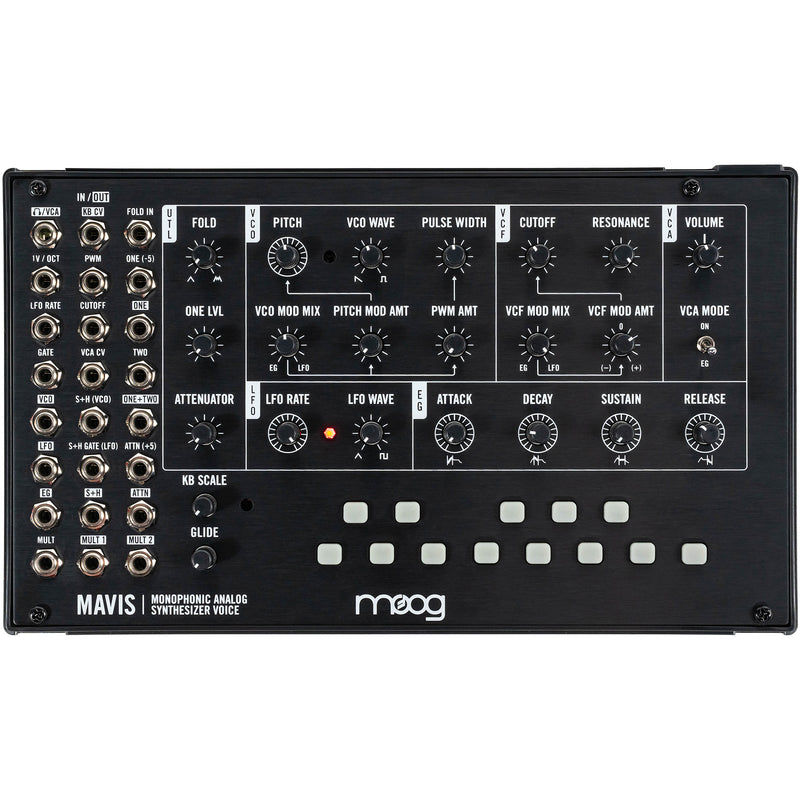
Want to understand synthesis by physically changing the connections inside the instrument? The Moog Mavis offers a more tactile route.
The Moog Mavis is a compact semi-modular analog synthesizer kit that works without patch cables but lets you override its normal signal path through its patch points.
That gives beginners direct experience with control voltage, modulation and signal routing. Instead of modulation being an abstract menu option, you can physically connect a source to a destination and hear the consequence.
It can also communicate with a larger modular system later, so the learning process has somewhere to go.
Best for: tactile learners, modular-curious musicians and beginners fascinated by patch cables and signal flow.
Explore the Moog Mavis at Moog Audio →
11. Dreadbox Typhon + Arturia KeyStep: Best Beginner Desktop Synth Setup
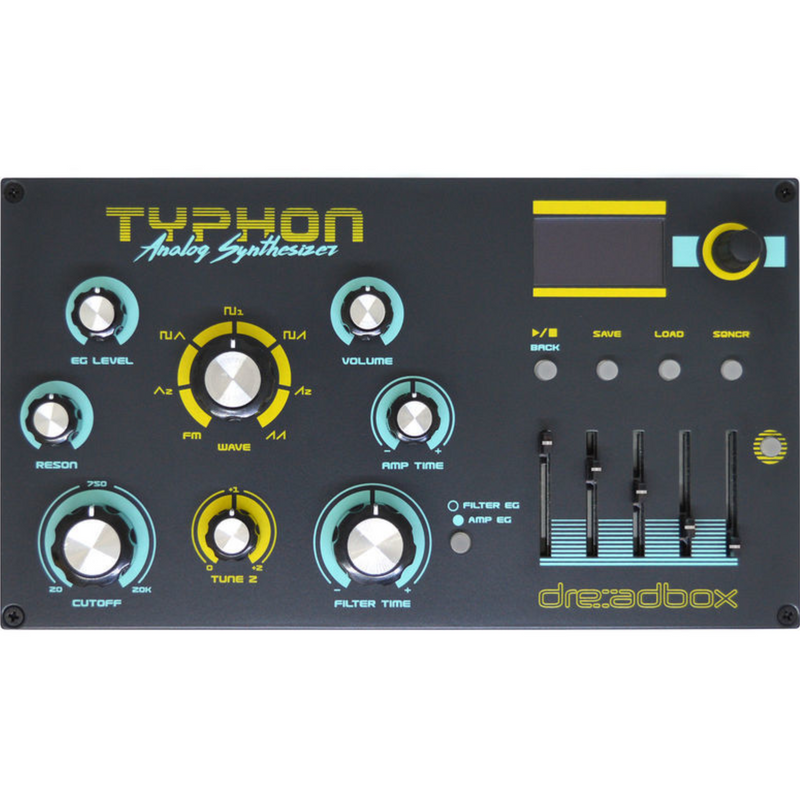
A synthesizer does not need to have a keyboard permanently attached to it.
The Dreadbox Typhon is a compact analog desktop synthesizer with a 32-note sequencer, extensive modulation and stereo effects. Pair it with an Arturia KeyStep Mk2 and you have a flexible starter system in which the controller and sound engine remain separate.
That becomes useful later. You can replace the synth while keeping the controller, replace the controller while keeping the synth, or use the KeyStep Mk2 to control several instruments.
It also teaches an important hardware concept early: MIDI controllers, sequencers and synthesizers can each be independent parts of the same system.
Best for: beginners interested in building a modular hardware setup piece by piece.
Explore the Dreadbox Typhon →
Explore the Arturia KeyStep Mk2 →
Browse more Dreadbox instruments →
12. ASM Hydrasynth: Best First Synth for Serious Sound Design
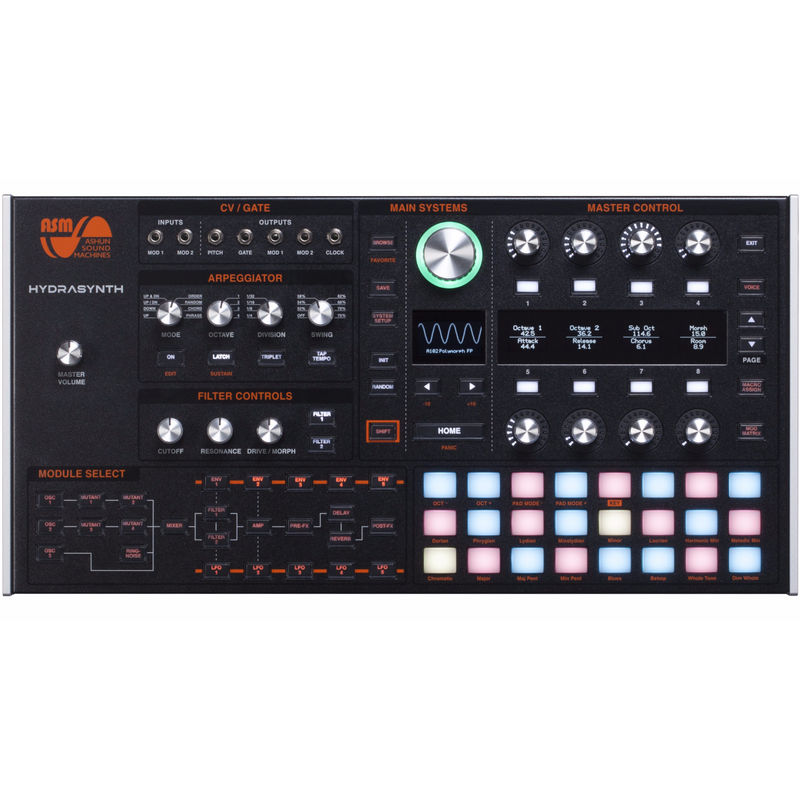
The ASM Hydrasynth Desktop is a deeper recommendation. It is not the simplest instrument in this guide, but some beginners already know that sound design is the part of electronic music they want to dive into.
The ASM Hydrasynth uses wavetable synthesis and provides three oscillators, Wave Mutators, two filters, extensive modulation and pressure-sensitive performance pads.
The architecture gives you considerably more to learn than a simple analog monosynth, but its module-based interface helps keep that depth organized. Choose an oscillator, filter, envelope or LFO and the relevant controls become available.
Best for: beginners who are already fascinated by evolving pads, complex textures, modulation and detailed digital sound design.
Explore the ASM Hydrasynth Desktop at Moog Audio →
13. Roland SH-4d: Best Beginner Synth for Building Complete Patterns

The Roland SH-4d sits between a traditional synthesizer and a compact production workstation.
It combines multiple oscillator models, four independent synth parts, a rhythm part, a multitimbral pattern sequencer, modulation and effects. Instead of creating only one bass or lead patch, you can use the instrument to build interconnected musical ideas.
That makes the SH-4d an interesting first instrument for someone whose real goal is electronic production rather than traditional keyboard performance.
The hands-on panel still gives you direct access to important sound-shaping controls, while the various synthesis models let you explore several families of electronic sound inside the same machine.
Best for: electronic producers who want synthesis, drums and sequencing in one compact hardware instrument.
Explore the Roland SH-4d at Moog Audio →
14. Elektron: Best Beginner Ecosystem for Pattern-Based Music Making
Elektron deserves a place in a beginner guide, but it is better understood as a different way of making music rather than as three unrelated recommendations.
The defining idea is the Elektron workflow: tracks, patterns, step sequencing, parameter locks, conditional behaviour, modulation and performance-oriented control. For someone who naturally thinks i
n loops and systems, this can make m
ore sense than a traditional keyboard synth.
Elektron Syntakt: synthesis, drums and complete patterns
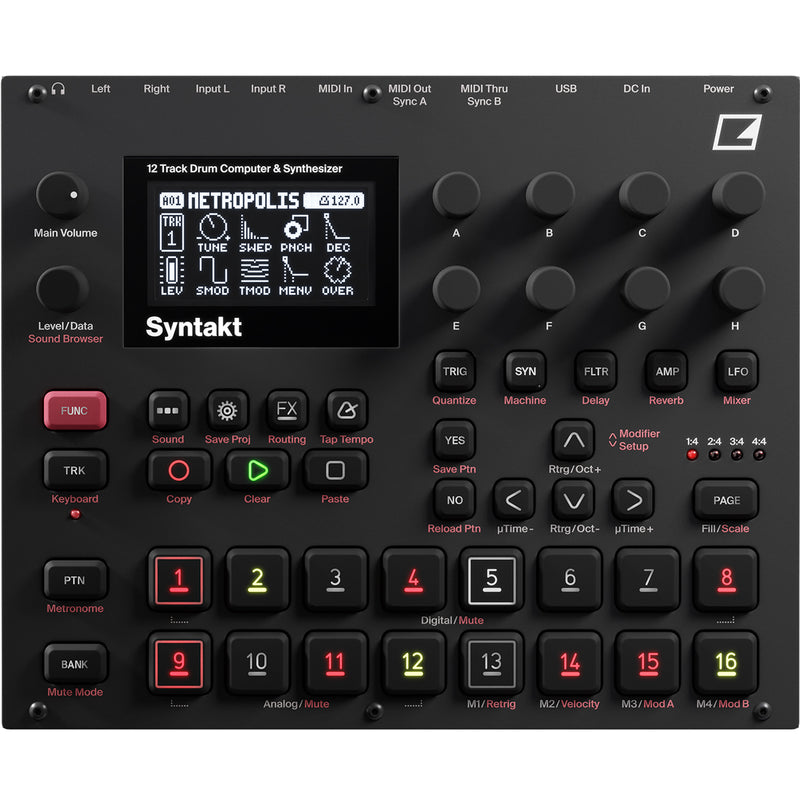
The Elektron Syntakt combines analog and digital synthesis across 12 tracks. It is particularly strong if you want one box for percussion, basslines, melodic elements and evolving sequences.
For a beginner, the advantage is that you are learning synthesis in context. Instead of designing a single sound in isolation, you immediately hear how that sound functions inside a pattern.
Elektron Digitakt II: sampling and sequencing

The Elektron Digitakt II is technically a sampler and drum computer rather than a conventional synthesizer.
Your raw material is recorded or imported audio rather than an oscillator. From there, filters, envelopes, modulation, effects and sequencing can transform a tiny sample into something completely different.
For beginners drawn to beat making, field recording or manipulating real-world sound, that can be a more intuitive first lesson in sound design than traditional synthesis.
Elektron Digitone II: FM synthesis inside the Elektron workflow

The Elektron Digitone II brings FM and other digital synthesis approaches into the same sequencing environment.
FM synthesis has a reputation for being intimidating, but combining it with presets, filters, modulation and Elektron's sequencer gives you multiple ways to approach it. You can begin musically, then gradually investigate what is happening inside the sound.
Choose Syntakt if you want synthesis and drums.
Choose Digitakt II if you want sampling and sound manipulation.
Choose Digitone II if you want melodic digital and FM synthesis.
Browse the Elektron collection at Moog Audio →
How to Choose Your First Synthesizer
There is no universal best beginner synthesizer. The right choice depends on what you want to learn and how your brain naturally likes to make music.
If you want to understand analog synthesis: start with the Korg Minilogue, Korg Minilogue XD, Novation Bass Station II or Korg Volca Keys.
If you want unusual and experimental sounds: the Arturia MicroFreak and Arturia MiniFreak give you a large amount of creative territory.
If you want something extremely portable: look at the Yamaha Reface CS, Korg Volca Keys and compact Roland options.
If you want to explore modular synthesis: the Moog Mavis introduces patching and control voltage without requiring you to build an entire Eurorack system.
If you already own a MIDI controller: desktop instruments such as the Dreadbox Typhon or ASM Hydrasynth Desktop let you spend your budget on the sound engine rather than another keyboard.
If you want to make complete patterns without a computer: consider the Roland SH-4d or the Elektron ecosystem.
Analog vs Digital Synth: Which Is Better for a Beginner?
Neither is automatically better.
Analog subtractive synths often make synthesis easier to visualize because the signal path can be very direct: an oscillator generates a waveform, a filter removes frequencies, and an envelope shapes how the sound changes over time.
Digital synthesizers can introduce wavetable, FM, physical-modelling and other synthesis methods that expand the available sound palette enormously.
Hybrid synths such as the Korg Minilogue XD and Arturia MiniFreak combine ideas from both worlds.
Do I Need a Keyboard to Use a Synthesizer?
No.
A desktop synthesizer such as the Dreadbox Typhon or ASM Hydrasynth Desktop can be controlled by a separate MIDI controller, sequencer or computer.
This can actually be an advantage because your controller and synthesizer can be upgraded independently.
What Is the Easiest Type of Synthesizer to Learn?
For understanding traditional synthesis, a straightforward subtractive synthesizer with dedicated controls is often the easiest place to begin. The Korg Minilogue, Novation Bass Station II and Korg Volca Keys all make those relationships relatively easy to hear.
But ease also depends on how you think. A sample-based producer may understand the Elektron Digitakt II more quickly than a traditional analog keyboard.
Should My First Synth Be Polyphonic?
Choose a polyphonic synthesizer if you want to play chords and pads. The Korg Minilogue, Arturia MiniFreak, Yamaha Reface CS and ASM Hydrasynth are all polyphonic options.
If your main goal is basslines, leads and sequences, a monophonic instrument such as the Novation Bass Station II or Dreadbox Typhon can be more than enough.
Your First Synth Should Make You Curious
The best first synthesizer is not necessarily the one with the longest specification sheet. It is the one that makes you want to keep touching it, listening to it and asking questions.
Start simple enough that you can hear cause and effect, but choose an instrument with enough depth that new doors continue opening as your skills grow.
Whether you are looking for your first analog synth, a portable digital instrument, a polyphonic keyboard, a semi-modular system or a pattern-based production box, explore the full synthesizer collection at Moog Audio →
You can also browse synthesizers currently on sale → or see the latest music gear releases →.